Concrete Cutting in Springfield, MA — Precise, Permitted, and OSHA-Compliant
From saw-cut control joints in new commercial slabs to wall openings in Springfield triple-decker basements, concrete cutting requires the right method, the right dust control, and in most cases a permit. Our crews use wet cutting to meet OSHA's crystalline silica standard, pull Dig Safe tickets before every below-grade cut, and manage all permit applications through Springfield's Inspectional Services Division.
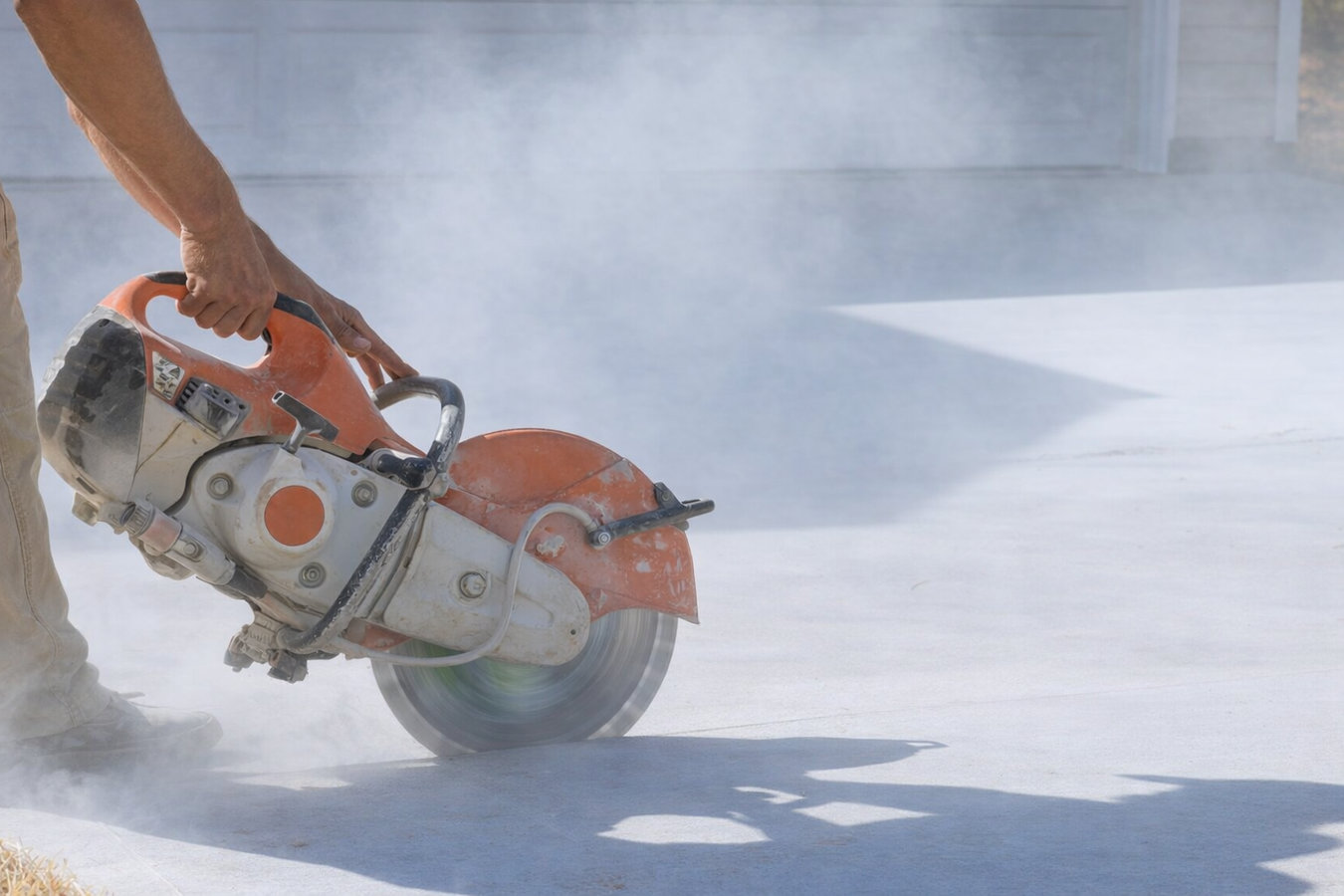
Concrete cutting in Springfield means working in a city with aging foundations, dense urban lots, and a building stock that goes back more than a century. When you cut into a 1920s triple-decker basement floor or saw through a parking lot to tie in utility access, you need a contractor who has assessed what's likely beneath the slab, pulled the required Dig Safe ticket, and has the right equipment for the job.
We provide flat slab sawing, wall sawing, and core drilling across Springfield's residential and commercial properties. Cutting is often one component of a larger scope — for new concrete parking lot building, saw-cut control joints are part of the finish process; for concrete floor installation, precision cutting creates clean tie-ins between new and existing slabs. We coordinate the full scope under one permit and one crew.
When You Need Concrete Cutting in Springfield
Control joint creation is the most common concrete cutting job on new construction. ACI 360R recognizes both early-entry dry-cut and wet conventional saw methods for creating contraction joints — the planned weak planes that guide shrinkage cracking to predictable locations rather than random surface fractures. In Springfield's climate, where summer heat and winter freeze-thaw stress are both pronounced, properly timed and spaced control joints are the single most effective way to extend the life of new flatwork.
Renovation projects generate the most varied cutting needs: cutting a new window or doorway through a foundation wall, opening a basement slab for a floor drain or sump pit, trenching through a commercial floor for new mechanical runs, or cutting out a frost-heaved section for replacement. Each of these applications uses a different method — and in most cases requires a Springfield building permit before the blade touches concrete.
Springfield's spring work season also brings slab removal jobs: driveways, stoops, and sidewalks that suffered progressive freeze-thaw damage over the winter and are now past repair. Cutting and removal is the first step before new concrete can go in.
Concrete Cutting Methods We Use in Springfield
Flat sawing (slab sawing) is the most common method for horizontal cuts on floors, driveways, parking lots, and roadways. A diamond-bladed walk-behind machine makes controlled cuts at specified depths. For parking lot construction and commercial floor installation, flat sawing creates the control joints that ACI 330 and ACI 360R require. Joint depth must be at least one-fourth the slab thickness to create an effective contraction plane.
Wall sawing uses a track-mounted circular diamond blade to make precise vertical or angled cuts through walls and elevated concrete slabs. It's the correct method for creating new door or window openings in foundation walls — common in Springfield's older housing stock where basement conversions and additions require new access penetrations. The track system allows cuts to be made within tight spaces and at exact dimensions.
Core drilling produces clean circular bores through concrete for utility penetrations, conduit runs, anchor installations, or structural core sampling. Hole diameters range from 1 inch to 24 inches depending on the application. In Springfield's dense urban lots, core drilling is often the only way to install new utilities without opening a full trench.
All cutting is performed wet to comply with OSHA's crystalline silica standard (29 CFR 1926.1153). Wet cutting reduces airborne respirable silica by up to 94% at the source compared to dry cutting. Cutting slurry is contained, collected, and disposed of properly — it does not run off into stormwater drains or onto neighboring property.
Concrete Cutting in Springfield's Aging Building Stock and Dense Neighborhoods
Springfield developed as a major industrial city — home to the Springfield Armory, brick mill buildings, and thousands of wood-frame triple-deckers. This older building stock means concrete contractors frequently encounter poured foundations and basement slabs from the early 1900s, often with unknown rebar configurations, rubble-stone underlayment, or potentially hazardous materials in floor toppings. Pre-cut investigation is standard practice on Springfield renovation jobs before blade contact.
Springfield's 48-inch frost line and extended freeze season — documented in UMass Extension freeze/frost occurrence data — create a surge of slab and driveway failures every spring that generates cutting and removal work across the city. We work throughout Springfield and surrounding communities including Holyoke, Westfield, and Northampton — all subject to the same freeze-thaw workload.
In Springfield's North End, South End, McKnight, and Forest Park neighborhoods, access constraints are the norm: narrow driveways, limited staging areas, on-street parking congestion, and shared access between triple-deckers. We use walk-behind flat saws and handheld wall saws as required by site conditions, with slurry and dust management planned around proximity to neighboring residences.
What to Expect: Concrete Cutting from Assessment to Finished Cut
Site Assessment
We review the project scope, assess the concrete type and thickness, identify rebar configuration where possible, and confirm whether the cut triggers a permit requirement. Free, no obligation.
Dig Safe and Permit
For below-grade cuts, we submit a Dig Safe 811 notification at least 72 business hours before work begins — required by Massachusetts law. If the project requires a Springfield building permit, we handle the application.
Wet Cutting
We select the correct method — flat saw, wall saw, or core drill — and execute cuts wet to control silica dust at the source per OSHA 29 CFR 1926.1153. Slurry is contained and removed from the site.
Clean-Up and Next Steps
Cut debris is removed and the surface is prepared for its next use. Flat sawing for control joints runs $3-$8/linear ft. Wall sawing for a foundation opening runs $500-$2,500. Core drilling runs $50-$250 per hole. We coordinate the next phase if the cutting is part of a larger concrete scope.
Get a Free Assessment for Your Concrete Cutting Project
Tell us what you need cut — slab, wall, floor, foundation — and we'll assess the method, permit requirements, Dig Safe obligations, and cost before any work begins.
Call (413) 334-1135Why Springfield Property Owners Choose Us for Concrete Cutting
Wet Cutting Always
Every cut is made wet to meet OSHA's crystalline silica standard. Slurry is contained and hauled off — no runoff onto neighboring property or stormwater drains.
Dig Safe Before Every Below-Grade Cut
We submit Dig Safe 811 notifications at least 72 hours ahead of any cut with below-grade potential, as Massachusetts law requires. We provide the ticket number as proof.
Permits Managed
We determine whether your cut requires a Springfield building permit, submit the application, and coordinate inspections. You don't face stop-work orders or code violations.
CSL-Supervised Structural Cuts
All structural concrete cutting — through foundation walls, load-bearing slabs, and elevated decks — is supervised under our Massachusetts Construction Supervisor License.
Concrete Cutting Questions — Springfield, MA
Related Concrete Services
Precise Concrete Cutting in Springfield — Permitted, OSHA-Compliant, Dig Safe Verified
Whether you need control joints in new flatwork, a wall opening in a century-old foundation, or a trench through a commercial floor, we handle the permits, silica controls, and Dig Safe coordination. Call for a free assessment.