Concrete Retaining Walls in Springfield, MA — Engineered to Last
A failing retaining wall is more than an eyesore — it's a slope stability problem that gets worse every winter. We build poured concrete retaining walls with frost-depth footings, engineered drainage, and ACI 318 reinforcement designed for Springfield's 36 to 48 inch frost depth and variable glacial soils.
Springfield's residential neighborhoods — Forest Park, Six Corners, McKnight, and the Hill neighborhoods — contain a high concentration of pre-World War II housing on sloped lots with original concrete or fieldstone retaining walls that are now failing. Deteriorating mortar, walls built without proper drainage, and footings set above the frost line all lead to walls that tilt, crack, and eventually collapse after a hard winter.
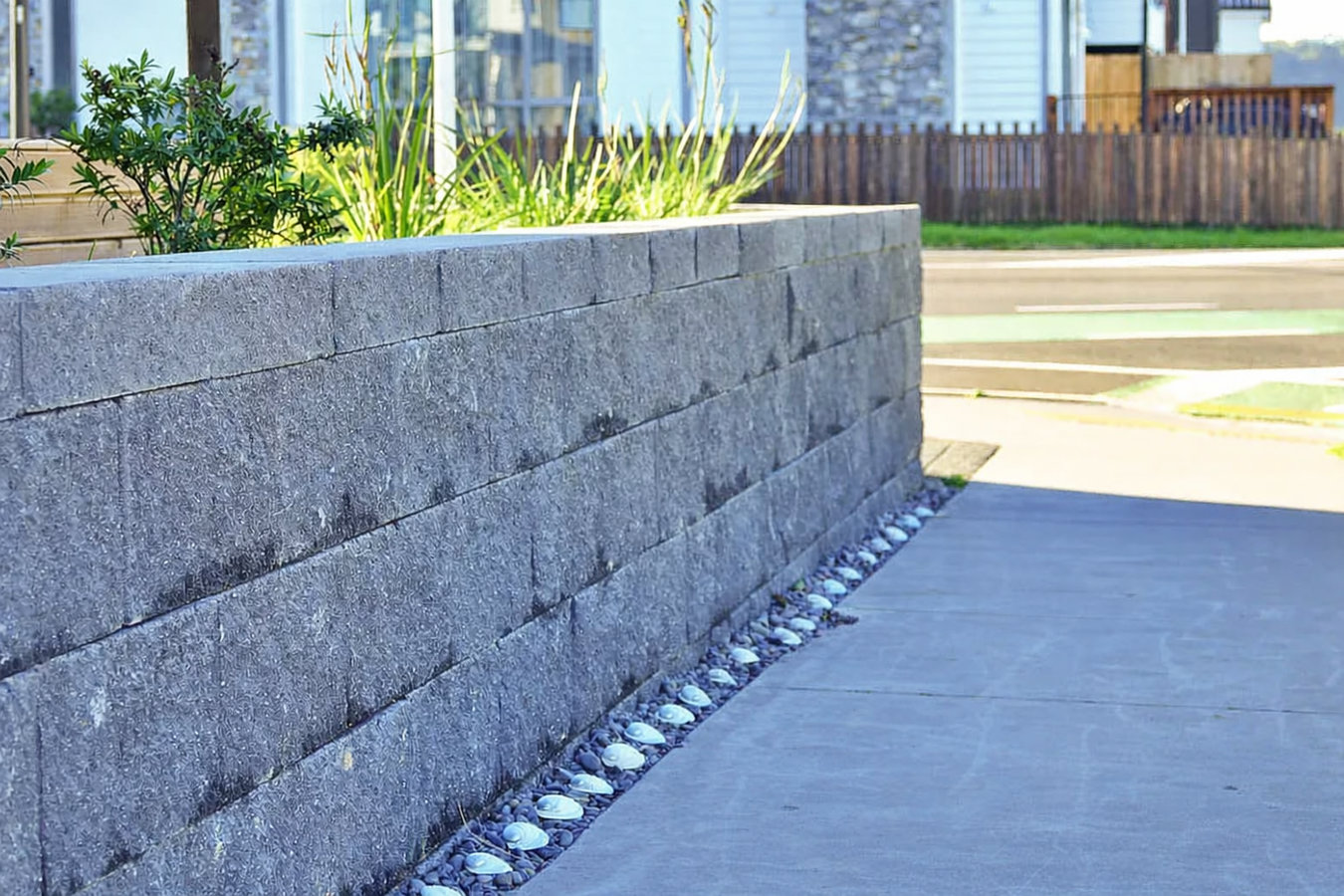
We build poured concrete retaining walls from scratch and replace failing block or fieldstone structures with monolithic reinforced concrete that handles Springfield's actual conditions. Every wall integrates crushed-stone backfill and perforated drain pipe as part of the standard build — not as an add-on. The structural design follows ACI 318-19 for reinforced concrete, with footing depth, stem thickness, and rebar sizing calculated for the lateral earth pressure your specific slope and surcharge loads produce.
For walls that also require structural footing support for above-grade structures, we coordinate retaining wall work with our concrete footings service to ensure the two systems integrate structurally rather than being designed and priced in isolation.
Signs Your Concrete Retaining Wall Needs Replacement
Visible tilting or leaning, even a few degrees, indicates the wall is moving under lateral earth pressure. This happens when footings weren't set below frost depth, drainage failed, or the original design didn't account for the actual soil and surcharge conditions. A tilting wall will not self-correct — it will continue moving until it fails.
Horizontal cracks through the middle of a stem wall, bulging face, or sections that have broken away entirely are structural failures requiring full replacement rather than patching. Surface cracks from freeze-thaw cycling are repairable; cracks through the structural section indicate the wall has exceeded its design capacity.
Water staining, efflorescence, and weep hole blockage all signal drainage failure behind the wall. Hydrostatic pressure buildup is the leading cause of retaining wall collapse in Springfield's wet springs and heavy nor'easter seasons. Acting before drainage fully fails preserves the option of a drainage repair rather than full wall demolition and replacement.
How We Build Concrete Retaining Walls in Springfield
Every retaining wall project starts with a site assessment that evaluates soil type, slope gradient, surcharge loads from driveways or structures above, and existing drainage patterns. Springfield's Pioneer Valley soils range from dense glacial till in elevated neighborhoods to soft alluvial deposits near the Connecticut River — conditions that require distinct footing designs, not a standard regional detail applied to every job.
Footings are excavated to 36 to 48 inches or below the local frost depth — whichever is greater — and poured with air-entrained concrete at a minimum compressive strength of 3,000 to 4,000 psi per ACI 318 requirements for freeze-thaw exposure. Rebar is tied into both the footing and the stem at spacings calculated for the lateral earth pressure and any surcharge loading present. For walls over four feet requiring a Springfield building permit, we coordinate engineered drawings with a Massachusetts-licensed structural engineer when required by the city's Permits & Inspections division.
Drainage is built into every wall as a standard element, not an optional upgrade: clean crushed stone backfill immediately behind the stem, perforated drain pipe at footing level, and weep holes through the wall face at 6 to 8 foot intervals. This system relieves hydrostatic pressure before it accumulates to dangerous levels — the single biggest factor in how long a retaining wall lasts in Springfield's wet springs and snowmelt seasons.
Where a retaining wall adjoins a structure requiring independent foundation support, we integrate the wall design with slab foundation building to ensure both systems share compatible structural assumptions rather than working against each other.
Concrete Retaining Walls in Springfield's Climate and Geology
Springfield's frost depth of 36 to 48 inches is one of the defining structural requirements for any concrete work in Hampden County. Every retaining wall footing must be set below this line — a requirement that adds significant excavation labor compared to warmer-climate markets and that eliminates many short-cut designs that would survive in the Mid-Atlantic or Southeast but fail in the Pioneer Valley after the first or second hard winter.
The city's glaciofluvial and alluvial soils near the Connecticut River corridor create variable bearing conditions that require actual site investigation rather than assumed values. A sloped yard in Forest Park may rest on dense till while a riverside parcel in the South End sits on compressible alluvial fill — both requiring distinct footing and drainage designs. We evaluate actual soil and drainage conditions on every Springfield site before finalizing any retaining wall design.
We serve retaining wall customers throughout the region, including Holyoke, Westfield, and Agawam, where sloped lots, aging infrastructure, and the same Pioneer Valley frost conditions create consistent demand for properly engineered concrete retaining wall solutions.
What to Expect from the Retaining Wall Process
Call and Site Review
We discuss your slope, the existing wall condition, and any surcharge loads above the wall. You'll know within the first conversation whether your project will require engineered drawings for a Springfield permit.
Soil and Drainage Assessment
We evaluate actual site soil conditions, test drainage patterns, and confirm proximity to structures above or below the wall before designing the footing or stem.
Written Proposal and Permit Plan
You receive an itemized written proposal covering footing excavation, concrete, rebar, drainage, backfill, and permit fees separately. We pull the Springfield building permit and schedule the required inspection.
Build and Inspection
Construction typically takes two to five days for standard residential walls, longer for tiered or engineered systems. The Springfield building inspector signs off on footing depth and rebar before concrete is poured. You'll have a permitted, documented installation.
Ballpark cost: $25 to $75 per square face foot installed. Exact pricing depends on wall height, soil conditions, and drainage requirements — confirmed in writing after the on-site assessment.
Get a Free Retaining Wall Estimate
We assess your site's soil conditions, slope, and drainage before pricing anything. No assumptions, no bids submitted without seeing the actual conditions your wall will face.
(413) 334-1135Why Choose Us for Concrete Retaining Walls in Springfield
Frost-Depth Footings as Standard Practice
Every footing is set below Springfield's 36 to 48 inch frost depth. This is not optional here — it is the difference between a wall that stands for 50 years and one that tilts after three winters.
Drainage Built In, Not Added On
Crushed-stone backfill, perforated drain pipe, and weep holes are included in every proposal from the start, because hydrostatic pressure failure is the leading cause of retaining wall collapse in this region.
Permits Pulled and Inspections Scheduled
We manage the Springfield building permit process from application through final inspection, including engineered drawings when required by the city's Permits & Inspections division.
MA CSL and HIC Licensed
Structural retaining wall work in Massachusetts requires a Construction Supervisor License. We hold active CSL and HIC credentials, both verifiable on Mass.gov, giving you the legal protections that unlicensed contractors cannot offer.
Concrete Retaining Walls FAQ
Related Services
Concrete Footings
Structural footings set below frost depth for walls, additions, and structures in Springfield's variable soils.
Learn moreSlab Foundation Building
New slab foundations coordinated with retaining structures for garages, additions, and new construction.
Learn moreStop Your Retaining Wall from Failing This Winter
A tilting or cracked retaining wall only gets worse through another freeze-thaw season. We assess your site, explain your structural options honestly, and provide a written estimate at no charge.