Foundation Raising in Springfield, MA — Lift Sunken Slabs Before the Next Freeze Season
Springfield's freeze-thaw cycles and Connecticut River Valley soils are hard on concrete. A sunken stoop, tilted garage slab, or settling basement floor is a tripping hazard and a water infiltration risk. We raise sunken concrete with mudjacking or polyurethane foam injection — at a fraction of replacement cost, with surfaces ready for use the same day.
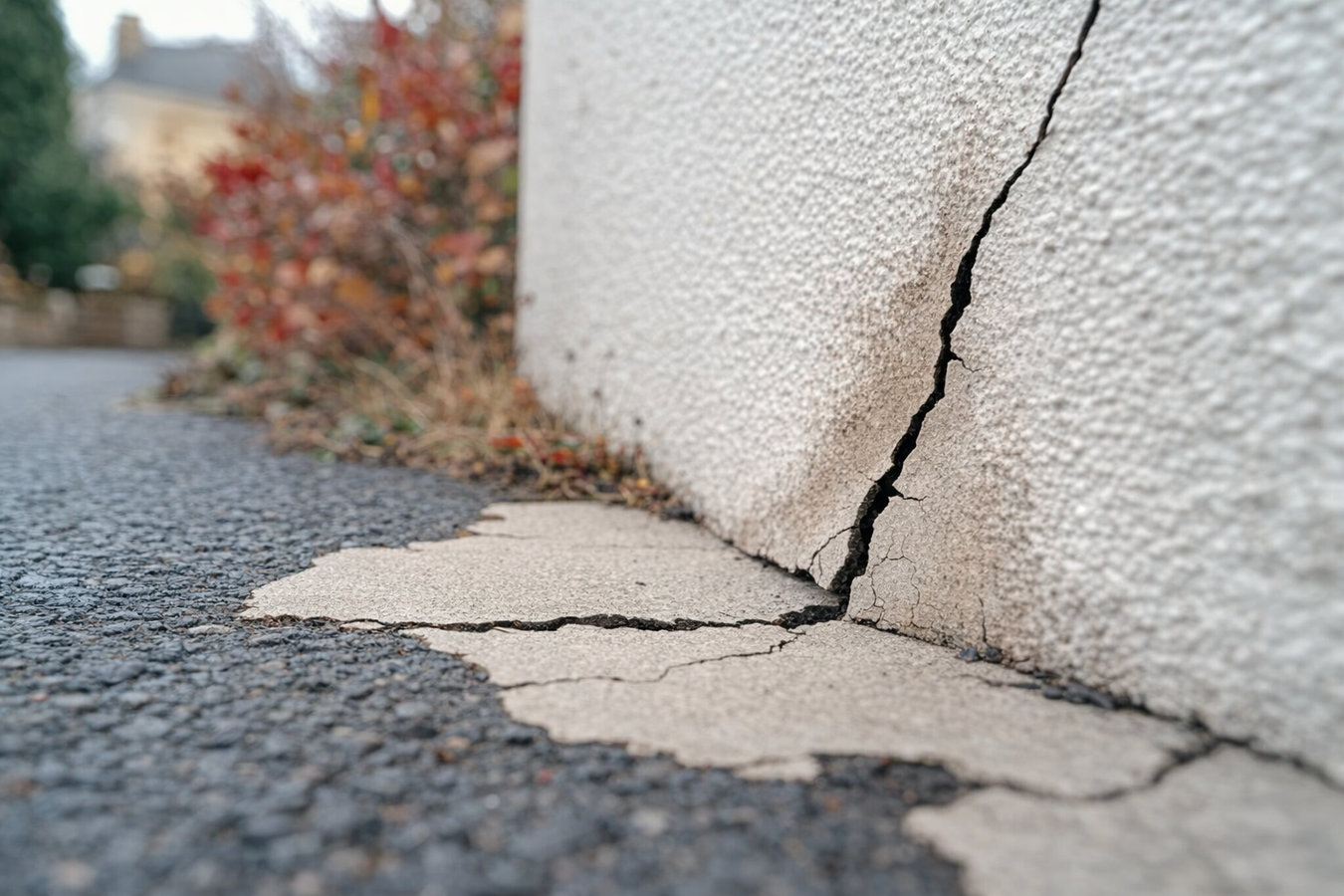
Foundation raising — also called slabjacking, mudjacking, or concrete lifting — corrects sunken and uneven concrete surfaces by filling voids and building pressure beneath the slab until it returns to its original elevation. For Springfield homeowners dealing with settled front stoops, tilted walkways, or uneven garage floors, it's often the most cost-effective repair available.
The method requires that the existing slab be structurally sound enough to lift as a unified piece. If the concrete is fragmented beyond repair, full replacement through our slab foundation building service is the better path. We assess slab condition honestly before recommending lifting — if your slab isn't a good candidate, we'll tell you. If it is, we pair the raise with an understanding of what caused the sinking, because lifting a slab without addressing the root cause leads to re-settlement.
Signs Your Springfield Foundation or Slab Needs Raising
The most obvious sign is a visible step or gap where a concrete slab has settled below an adjacent surface — a front stoop that's dropped below the threshold, a garage apron that no longer meets the driveway cleanly, or a sidewalk section that's created a tripping hazard. When you see water pooling on a slab rather than draining away, the cross-slope has been lost and frost heave is accelerating the damage.
Basement floor panels that develop consistent low spots — often near floor drains or exterior walls — indicate sub-base consolidation or drainage failure beneath the slab. In Springfield's older triple-decker and single-family stock, this is common in homes where the original drainage system no longer functions as designed.
Foundation raising is most effective when the slab has settled gradually and uniformly. Slabs that are severely cracked, fragmented, or undermined by chronic drainage failure are typically replacement candidates rather than lifting candidates. A qualified assessment determines which situation you're in.
Foundation Raising Methods We Use in Springfield
We offer two proven foundation raising methods, selected based on your slab's condition, void characteristics, and soil type. Mudjacking pumps a slurry of portland cement, local sand, and water through access holes of 1-2 inches in diameter. The slurry fills void space, then builds hydraulic pressure to lift the slab. It's a reliable method for larger slabs where cost is the primary driver, and it's been used in the concrete trade for nearly a century.
Polyurethane foam injection uses a two-part expanding foam through smaller holes — typically under an inch — that sets within 15-30 minutes. Because polyurethane weighs significantly less than a cement slurry, it doesn't add load to the substrate. This is a meaningful advantage on Springfield's frost-susceptible silty soils where additional weight could worsen sub-base consolidation. Foam also resists moisture erosion, so the fill material won't wash away during the next heavy rain or snowmelt event.
After lifting, all access holes are patched with color-matching grout. For slabs that have sustained minor surface damage in the process of settling, we can address cosmetic repairs at the same time. Where the root cause is drainage-related, we discuss drainage corrections that should accompany the lift to prevent re-settlement — sometimes in combination with a related foundation installation or slab foundation building scope.
For Springfield's dense urban neighborhoods — triple-deckers in McKnight, narrow side yards in the North End, fenced lots in the South End — we use cart-mounted injection equipment that can reach locations truck-mounted rigs cannot. Urban access constraints don't stop the job.
Why Foundation Raising Is Particularly Common in Springfield, MA
Springfield experiences a genuine continental winter climate, with ground frost penetrating to depths the Massachusetts State Building Code addresses through its 48-inch footing requirement. Repeated freeze-thaw cycles throughout a typical Springfield winter — where temperatures routinely swing above and below freezing — cause dramatic expansion and contraction of soil moisture, progressively dislodging the sub-base beneath slabs. This cyclical frost action is one of the dominant contributors to slab settlement in Hampden County, making demand for foundation raising particularly concentrated in spring after each hard winter.
Springfield's housing stock is among the oldest in Massachusetts, with a large share of its residential buildings — triple-deckers, Victorians, and early-20th-century multifamily structures — constructed before modern drainage standards. These aging foundations in Forest Park, Upper Hill, Six Corners, and the Old Hill district generate persistent demand for raising and repair. We work across the region, including West Springfield, Agawam, and Chicopee, where the same soils and frost conditions drive the same settlement patterns.
What to Expect: Foundation Raising from Assessment to Same-Day Use
Slab Assessment
We inspect the slab for structural soundness, map the settlement pattern, probe for void locations, and assess the likely cause. We'll tell you directly if the slab is a lifting candidate or a replacement candidate.
Permit and Method Selection
If the project requires a Springfield building permit, we handle the application. We select mudjacking or foam injection based on slab size, void depth, soil type, and your budget — and explain the tradeoffs before you decide.
Injection and Lift
Access holes are drilled, material is injected, and the slab is lifted incrementally under controlled pressure. Most residential jobs take 1-3 hours on-site. You watch the lift happen.
Patch and Return to Use
Access holes are patched with grout. Foam-lifted surfaces are ready for foot traffic within 30 minutes; mudjacked surfaces bear vehicle weight after several hours. Cost typically runs $3-$8/sq ft for mudjacking, $5-$25/sq ft for foam.
Schedule a Foundation Assessment Before the Next Freeze Season
Springfield's spring lifting season books fast. We assess your slab condition, explain your options — raise or replace — and give you an honest written estimate before any work begins.
Call (413) 334-1135Why Springfield Homeowners Choose Us for Foundation Raising
Honest Slab Assessment
We tell you whether your slab is a lifting candidate or a replacement candidate before any money changes hands. No upselling a raise on a slab that needs replacement.
Right Equipment for Dense Springfield Lots
Cart-mounted injection equipment threads through gates, narrow side yards, and basement stairwells that truck rigs can't access in the city's multifamily neighborhoods.
Licensed and Registered
All foundation work is performed under a Massachusetts CSL and backed by our Home Improvement Contractor registration — the two credentials Massachusetts requires for this work.
30-50% Less Than Replacement
Foundation raising consistently costs 30-50% less than removing and replacing the same slab, with far less disruption to surrounding landscaping and adjacent structures.
Foundation Raising Questions — Springfield, MA
Related Concrete Services
Stop the Settlement Before Another Springfield Winter Makes It Worse
Foundation raising is most effective before freeze-thaw cycles cause more displacement. Call today for an honest slab assessment and a written estimate — no obligation, no pressure.