Foundation Installation in Springfield, MA — Built to the Depth Massachusetts Demands
A foundation that fails in Springfield almost always fails for the same two reasons: footings that didn't reach the 48-inch frost depth required by Massachusetts Building Code, or soils that were never properly assessed before pouring. We address both — every project is permitted, inspected, and supervised by a CSL-licensed contractor who knows Springfield's soil conditions and regulatory requirements.
Springfield's housing inventory is among the oldest in the Pioneer Valley. Neighborhoods like Indian Orchard, Pine Point, and the North End are packed with mill-era triple-deckers and single-family homes built on original fieldstone, brick, or early CMU block foundations that are now failing — lacking modern waterproofing, reinforcement, and frost-depth compliance. Whether you need a full foundation replacement or a new installation for an addition or new construction, the scope always starts with the same question: what kind of soil are we building on? For projects where the foundation wall ties into an existing slab foundation, we coordinate both phases as one continuous project. Where an existing foundation has settled but doesn't require full replacement, foundation raising may be the right scope instead.
Signs You Need Foundation Installation or Replacement
Horizontal cracking along the mid-height of a block or poured wall is the clearest sign of lateral soil pressure overwhelming the foundation's structural capacity — this requires prompt attention before progressive failure occurs. Stair-step cracking in block foundations typically indicates differential settlement: one part of the footing is moving while another holds, usually because the footing never reached frost depth or was placed on compressible soil. Chronic basement water infiltration that doesn't resolve with surface drainage corrections points to walls that lack waterproofing membranes, which is common on pre-1960 Springfield construction. For new construction — additions, ADUs, new homes — foundation installation is required before any framing begins. Waiting on a deteriorating foundation compounds repair costs significantly each year.
How We Install Foundations in Springfield
Every foundation project begins with a soil assessment and a permit application to Springfield's Inspectional Services Division. We submit the required plot plan, foundation drawings, and — for structures exceeding 35,000 cubic feet — engineer-stamped documents through the city's permit portal before any excavation begins. Two mandatory inspections are scheduled: one at the footing stage before the pour, and one at the wall completion stage before backfill.
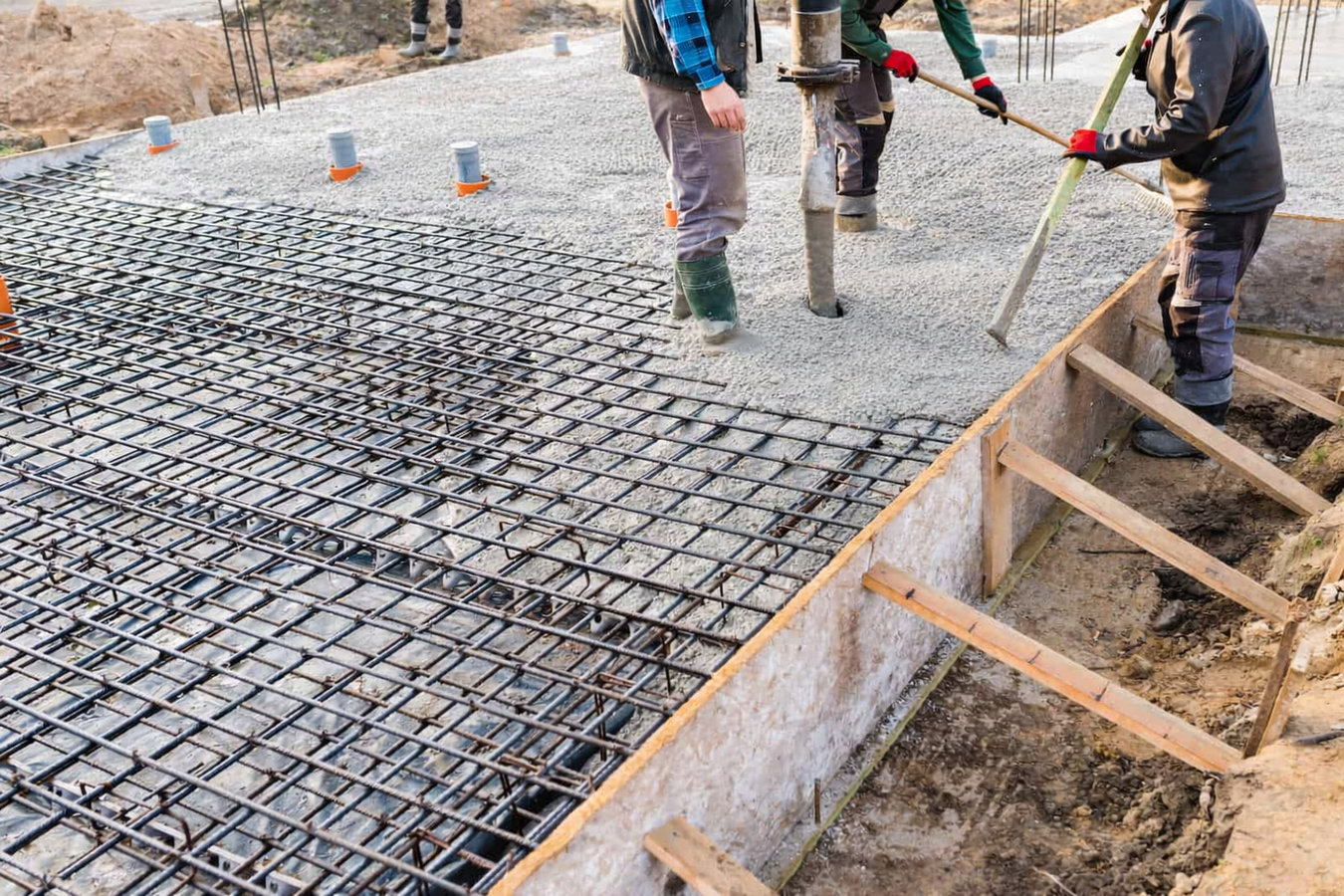
Excavation reaches the full 48-inch minimum frost depth at all footing locations per 780 CMR. For new poured concrete walls, we use reusable steel or aluminum form panels to create monolithic cast-in-place walls — the modern standard preferred by structural engineers over CMU block because of superior lateral strength and water resistance. Horizontal and vertical steel rebar is placed to ACI 318 requirements, with spacing and size determined by wall height, soil lateral pressure, and the surcharge from New England snow loads. Concrete is batched per ASTM C94/C94M quality standards, with minimum 3,000–4,000 psi compressive strength and appropriate air entrainment for the IECC Climate Zone 5 freeze-thaw exposure class.
Dampproofing or full waterproofing membrane is specified based on site drainage conditions — particularly important in low-lying Springfield neighborhoods near the Connecticut River where seasonal water tables can reach within a few feet of slab level. For every new foundation we install in Hampden County, we incorporate passive radon-resistant rough-ins — a sub-slab gravel layer, vapor barrier, and a roughed-in vent pipe — at negligible incremental cost given the county's elevated radon potential documented by the Massachusetts DPH. For projects where the wall system connects to an existing slab foundation, we coordinate forming and joint detailing at the interface to prevent water infiltration. Where an existing structure has settled without full wall failure, foundation raising may avoid the cost of full replacement.
Foundation Installation Across Springfield and the Connecticut River Valley
Springfield averages more than 120 frost days per year. The state-mandated 48-inch footing depth is strictly enforced by the city's Inspectional Services Department and is verified at the required footing inspection stage. Poured concrete is the modern standard for new foundation installations — a contrast with much of Springfield's pre-1960 housing stock, where original CMU block walls now show horizontal cracking from lateral soil pressure they were never designed to carry. The Pioneer Valley's clay-heavy soils in lower elevations add another layer of complexity that contractors without local experience often underestimate.
We install foundations throughout the Springfield metro area, including Enfield, CT, East Longmeadow, and Northampton, where the same frost depth requirements and Pioneer Valley soil conditions apply.
What to Expect From a Foundation Installation Project
Site Assessment
We evaluate soil conditions, drainage, and site access before providing any pricing. Soft or clay-heavy soil is identified upfront so it's priced into the proposal.
Written Quote
You receive a line-item proposal covering excavation, footing, wall formwork, rebar, concrete, waterproofing, radon rough-in, and backfill. Permit fees included.
Permit & Inspections
We submit to Springfield's Inspectional Services Division and schedule the mandatory footing and wall inspections. Spring and summer project slots book several months in advance.
Pour & Cure
Active work runs 5–10 days depending on footprint. Forms strip after 24–48 hours; framing-ready at 7 days for light loads; full 28-day cure for structural loads. Typical residential project range: $25,000–$75,000+.
Get a Free Foundation Installation Estimate
We'll assess your soil conditions, scope the full project — footing depth, wall system, waterproofing, radon rough-in — and provide a written quote with permit costs included. No surprise change orders.
(413) 334-1135Why Springfield Customers Choose Us for Foundation Installation
Soil-Matched Designs for Springfield's Variable Ground
From clay-heavy soils near the South End riverfront to firmer glacial till in Forest Park, we assess site-specific bearing capacity before sizing any footing — so you're never paying for an undersized foundation that shifts.
Fully Permitted, Inspection-Ready
We pull every required permit through Springfield's Inspectional Services Division and schedule footing and wall inspections at the correct stages — protecting your property value and ensuring full code compliance for resale or refinancing.
Radon-Resistant Rough-Ins as Standard Practice
Because Hampden County carries elevated radon risk, we incorporate passive sub-slab ventilation rough-ins during every new foundation pour at no additional cost — a small step that prevents significant remediation expense later.
CSL-Licensed on Every Project
All supervisory work is performed by Massachusetts CSL-licensed Construction Supervisors — required by 780 CMR. You can verify our license standing through the Mass.gov portal before signing a contract.
Foundation Installation FAQ — Springfield, MA
Related Services
Slab Foundation Building
Pour a concrete slab foundation for a new addition, garage, or ADU — engineered for Pioneer Valley soils and the Massachusetts Stretch Energy Code.
Foundation Raising
Lift and stabilize a settled foundation without full replacement when the structural wall system is still sound.
Ready to Install a Foundation in Springfield, MA?
Spring and summer project slots fill up months in advance in Springfield. Call now to schedule a site assessment, get a written quote, and secure your place in our construction calendar before the season starts.