Concrete Footings in Springfield, MA — Poured to 48-Inch Depth, Permitted and Inspected
Every structure starts with what you can't see. Springfield's mandatory 48-inch frost depth means footings require more excavation, more concrete, and more planning than most of New England. We do it right the first time — assessed for local soil conditions, reinforced to ACI 318 standards, and inspected by Springfield's building department before a drop of concrete goes in.
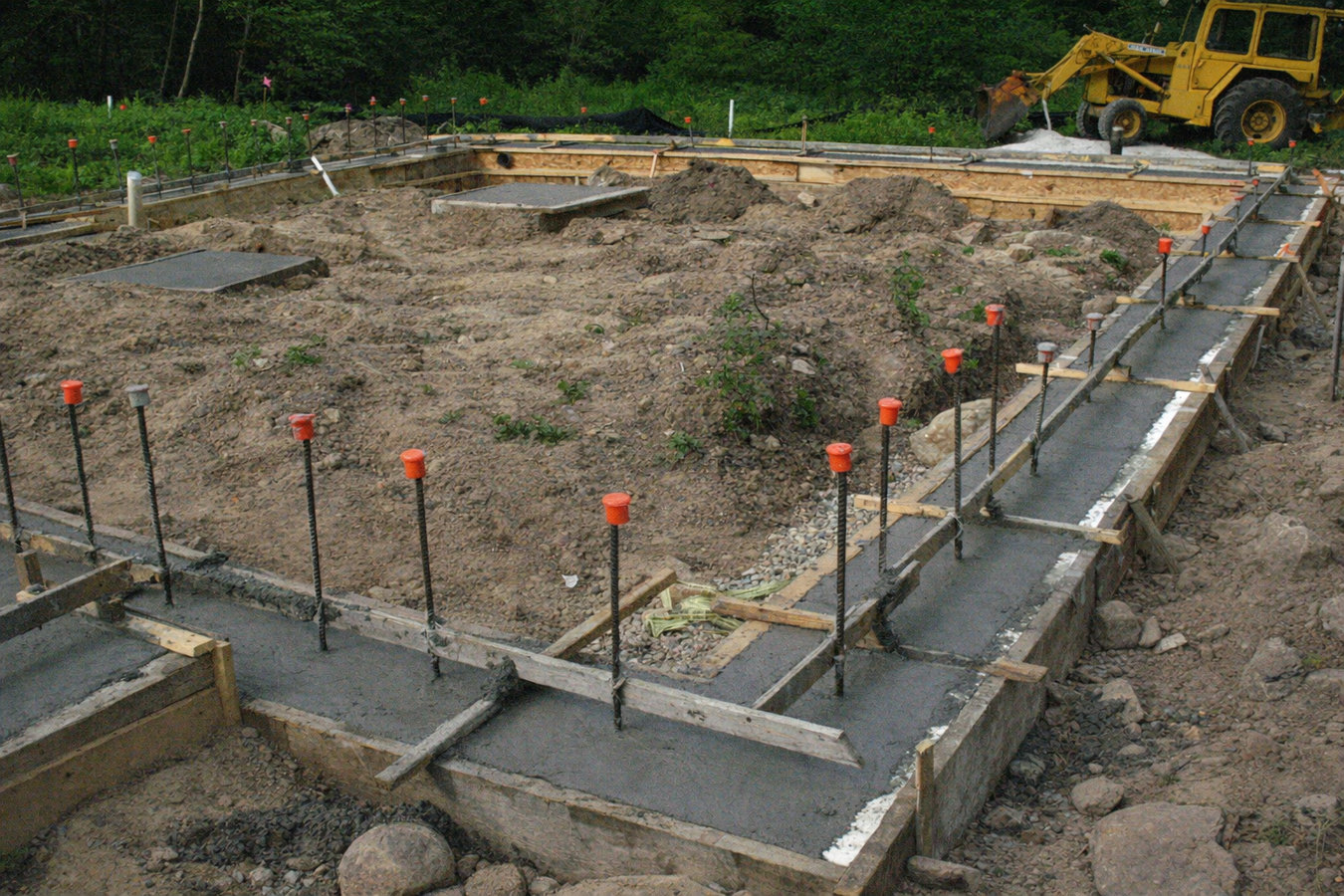
Concrete footings are the bearing element that transfers the weight of everything above them into stable ground. In Springfield, MA, getting footings right means more than just pouring concrete at depth — it means understanding the soil conditions specific to where your project sits in the Connecticut River Valley, meeting the city's 48-inch frost depth requirement, and passing the mandatory pre-pour inspection before a shovel of concrete goes into the forms.
Whether you're building a new addition, replacing a deteriorated foundation section, installing deck posts, or constructing a retaining wall in a Forest Park neighborhood home, the footing is what makes the project last. Our work on foundation installation and concrete retaining walls always starts with properly engineered footings — they're not an afterthought.
When You Need New Concrete Footings in Springfield
New construction always requires footings. But many Springfield projects involve existing structures that have failed at the footing level — settlement cracks in foundation walls that trace back to inadequate bearing depth, walls that bow or separate because original footings were undersized, or additions that need to connect structurally to a home with rubble-stone or unreinforced original footings.
Springfield's Forest Park, McKnight, and South End neighborhoods contain a large share of pre-World War II housing that predates modern footing codes. Many of these homes were built without reinforcement and at depths that no longer satisfy 780 CMR. Renovation permits in these areas routinely require new footings to support structural additions or repairs.
Deck and porch footings are another common project. Massachusetts decks attached to a dwelling require a building permit, and Springfield inspectors verify footing depth. Footings that fail this inspection must be re-dug — a costly delay that we prevent by digging to the correct depth from the start.
How We Install Concrete Footings in Springfield
The process begins at the building department. We submit the permit application to Springfield's Office of Code Enforcement and coordinate the pre-pour inspection, which must occur before any concrete is placed. Once excavation is complete and forms are set, we call for inspection. The inspector verifies footing depth (minimum 48 inches for exterior footings), form dimensions, and rebar placement before authorizing the pour.
Rebar reinforcement follows ACI 318-19 requirements: Grade 60 deformed steel (#4 or #5) in a grid pattern, with a minimum 3-inch concrete cover from the bottom of the footing to protect steel from moisture. In Springfield's compressible river-valley soils, correct rebar placement is especially important because differential settlement creates bending stress that unreinforced concrete can't resist.
Concrete mix is specified at 4,000 psi with air entrainment for all exterior footings — not the minimum 3,000 psi. Air-entrained concrete resists the internal cracking that Springfield's freeze-thaw cycles would otherwise cause over successive winters. In stable, undisturbed soil we can pour directly into an earthen form; in softer or variable conditions, we use wood or metal forms to maintain precise footing geometry. After placement, concrete is vibrated mechanically to eliminate voids, and the top surface is struck level to provide a flat bearing plane for the foundation wall or block above.
The same careful footing engineering underpins our foundation installation and concrete retaining wall services, where the footing is the first critical element in a multi-stage structural scope.
Concrete Footings in Springfield's Pioneer Valley Climate and Soils
Springfield sits on the floor of the ancient glacial Lake Hitchcock, which deposited deep layers of fine-grained silts and clays beneath the Connecticut River Valley. The USGS geologic map of the Springfield South Quadrangle documents this lacustrine geology. These soils have lower bearing capacity and higher compressibility than coarser glacial outwash on higher ground, which means footing width requirements can vary across short distances within the city.
Springfield averages more than 130 frost days per year, and the region's freeze-thaw cycle is relentless through late fall and early spring. ACI 306R cold-weather concreting practices — heated subgrade, insulating blankets, accelerated mixes — are standard procedure for shoulder-season footing work in our crews. We also work throughout Ludlow, East Longmeadow, and Holyoke — all subject to the same frost depth requirement and Connecticut River Valley soil conditions.
What to Expect: Concrete Footings from Call to Inspection Sign-Off
Site Visit and Soil Assessment
We visit the project location, assess soil conditions at grade and probe depth, confirm excavation requirements, and measure the footing layout. Free, no obligation.
Permit and Design
We submit the building permit application to Springfield's Office of Code Enforcement. You receive a written proposal specifying footing depth, dimensions, rebar schedule, and concrete mix.
Excavation, Forms, and Rebar
We excavate to minimum 48-inch depth, set forms or prepare earthen forms where soil conditions allow, and place rebar per ACI 318-19. The Springfield building inspector approves the formed footing before any concrete is placed.
Pour and Cure
Concrete is placed, consolidated by mechanical vibration, and struck level. Typical residential footing cost runs $7-$9 per linear foot; isolated post footings run $50-$350 each. Construction can resume after adequate cure — typically 3-7 days in warm conditions.
Get a Free Footing Assessment for Your Springfield Project
We'll visit the site, assess soil conditions, confirm frost-depth requirements, and give you a written proposal with footing dimensions, rebar schedule, concrete spec, and permit fees.
Call (413) 334-1135Why Springfield Property Owners Trust Us for Concrete Footings
Always 48 Inches
We excavate to the full Massachusetts frost-depth requirement every time. No shortcuts that fail inspection and force a re-dig.
Soil-Specific Sizing
Springfield's Lake Hitchcock silts and clays vary by block. We assess actual bearing conditions at excavation depth before finalizing footing width.
Permit and Inspection Managed
We pull the permit, coordinate the pre-pour inspection with Springfield's Office of Code Enforcement, and document everything for your records.
Licensed for Structural Work
All footing and foundation work is supervised under a Massachusetts Construction Supervisor License — the credential 780 CMR requires.
Concrete Footing Questions — Springfield, MA
Related Concrete Services
Build Your Springfield Project on Footings That Pass Inspection — the First Time
Springfield's 48-inch frost depth and Connecticut River Valley soils demand footings that are designed for local conditions, not copied from a warmer market. Call for a free assessment and written proposal.