
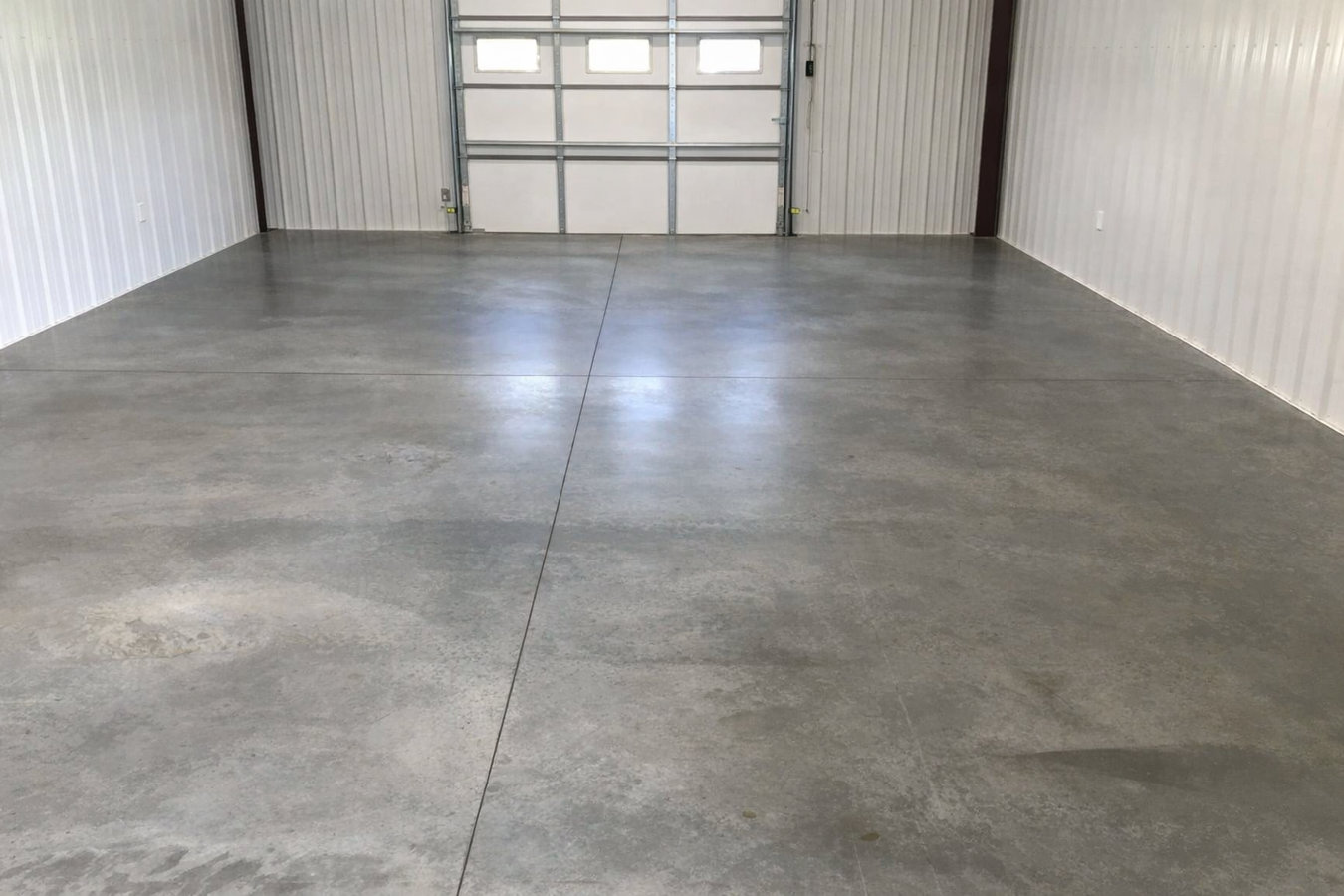
Concrete Floor Installation in Springfield, MA — Built Right from the Sub-Base Up
Springfield's oldest homes have basement slabs poured without vapor barriers, without adequate reinforcement, and without the sub-base preparation the Massachusetts State Building Code now requires. We install new concrete floors that meet current 780 CMR standards and survive the Pioneer Valley's freeze-thaw cycles.
Concrete floor installation in Springfield covers a wide range of situations: replacing a deteriorated basement slab in a pre-1960 two-family, installing a new garage floor for an addition, pouring a commercial slab for a retail or industrial space, or finishing an unfinished basement that currently has bare soil or a crumbling thin pour. The scope and technical requirements vary significantly across these scenarios, and selecting the right approach requires understanding the specific subgrade conditions and moisture dynamics present in each building.
All new concrete floor installations we complete follow ACI 302.1R floor classification guidelines, with sub-base preparation, vapor retarder installation, reinforcement, and jointing designed for the specific use class and exposure conditions. For garage floor coating or resurfacing of an existing slab, see our garage floor concrete service, which handles preparation and protective coating systems for slabs that don't require full replacement.
We carry active Massachusetts CSL and HIC credentials and pull all required permits through Springfield's Department of Inspectional Services before any concrete is poured — giving homeowners a documented, code-compliant installation that won't create problems at resale or with insurance.
Signs Your Concrete Floor Installation Needs Replacement
Significant cracking, surface spalling, and sections that sound hollow when tapped are signs the slab has exceeded its useful life. In Springfield's older multi-family homes, pre-1960 basement slabs were commonly poured at 2 to 3 inches thick without reinforcement or vapor barriers — slabs that are now settling differentially, wicking moisture from the subgrade, and generating concrete dust with every step.
Persistent moisture, efflorescence (white mineral deposits), and water pooling after rain events indicate that the slab lacks an effective vapor retarder and that subgrade drainage around the foundation is insufficient. These conditions make applying any floor finish or coating impractical until the slab itself is addressed. In Springfield's clay-heavy soil zones, this is a common condition in the North End, South End, and lower elevation areas near the Connecticut River.
If you're planning a major renovation — finishing a basement, converting a space for a new use, or preparing for epoxy or polished concrete finishes — a slab assessment before demolition determines whether the existing pour can be prepared for the new finish or whether full replacement is the more cost-effective path given its thickness and condition.
What Concrete Floor Installation Includes
Every concrete floor installation begins with subgrade preparation — the step most commonly skipped in budget projects and the one most responsible for long-term cracking and settlement. We excavate to the required depth, compact the existing subgrade, and install a minimum 4-inch compacted granular base of processed gravel that provides uniform support and drainage beneath the slab. In Springfield's clay-rich lower-elevation soils, this base course may need to be deeper to bridge soft or compressible material.
A polyethylene vapor retarder meeting ASTM E1745 standards is installed directly beneath the slab on all projects where moisture migration from the subgrade could affect floor finishes or indoor air quality — which applies to virtually every Springfield basement. The concrete mix is air-entrained at 4 to 7% for any pour with freeze-thaw exposure, with a water-to-cement ratio no higher than 0.50 per ACI guidance. Control joints are sawn or tooled at spacing no greater than 24 to 36 times the slab thickness to predetermine where shrinkage cracks will form.
Reinforcement options include deformed steel rebar, welded wire reinforcement (WWR), or synthetic fiber additives mixed into the batch — the correct choice depending on slab thickness, loading conditions, and crack-control requirements per ACI 360R. Standard residential basement floors require a minimum 4-inch slab with WWR; garage floors and commercial slabs typically require 5 to 6 inches with rebar at closer spacing.
For projects that include structural support elements such as piers, grade beams, or thickened footings, we coordinate concrete floor installation with our slab foundation building service to ensure the floor slab and any structural foundation elements are designed and poured as an integrated system.
Concrete Floor Installation in Springfield's Built Environment
Springfield is one of the denser cities in western Massachusetts, with a significant portion of its housing stock consisting of attached multi-family buildings on narrow urban lots — particularly in the North End, South End, and Six Corners areas. Tight lot access, no dedicated staging areas, and the need to work around occupied neighboring units means our crew regularly manages pump-truck placements, street access permits from the Springfield DPW, and concrete truck scheduling that accounts for narrow urban corridors.
Springfield's 48-inch design frost depth under 780 CMR means that any garage floor or exterior slab near grade requires edge thickening or frost-protected design details to prevent seasonal heave. The Massachusetts 9th Edition Building Code, enforced by Springfield's Department of Inspectional Services, applies these requirements to both residential and commercial slab construction, and we design and permit our installations accordingly.
We install concrete floors throughout the Pioneer Valley, including Chicopee, Ludlow, and East Longmeadow, where similar housing stock conditions and clay subgrade soils create the same demand for properly prepared, code-compliant concrete floor installations.
What to Expect from the Concrete Floor Installation Process
Initial Consultation
We discuss the space, its current slab condition, your intended use (living space, garage, commercial), and any finish or coating goals. You'll know within the first call whether a permit will be required and what subgrade investigation is needed.
Subgrade Assessment
We inspect the existing slab or bare subgrade, identify moisture conditions, evaluate soil bearing capacity in areas of concern, and confirm access constraints for concrete delivery and pump trucks.
Written Itemized Proposal
You receive a written quote that breaks out demolition, subgrade prep, vapor retarder, concrete, reinforcement, finishing, and permit fees separately. No bundled pricing.
Installation and Cure
Standard residential basement slabs are typically poured in one day. You can walk on the floor in 24 to 48 hours. Full cure for coatings or heavy loads is 28 days. Curing blankets are used in shoulder-season pours to maintain the 50°F minimum surface temperature required by ACI 308R.
Ballpark cost: $4 to $8 per square foot for a plain residential slab; decorative and commercial finishes price higher. Confirmed in writing after on-site assessment.
Get a Free Concrete Floor Installation Estimate
We assess your subgrade conditions and moisture situation in person before quoting anything. No bids submitted without seeing the actual conditions your slab will be built on.
(413) 334-1135Why Choose Us for Concrete Floor Installation in Springfield
Sub-Base Preparation Done First
We don't pour concrete over a bad subgrade. Compacted gravel base, vapor retarder, and subgrade assessment are part of every installation — not optional upgrades added when you ask.
Permit-Ready from Day One
We pull every required building permit through Springfield's Department of Inspectional Services before the first yard of concrete is poured — no shortcuts, no after-the-fact corrections.
HEPA Dust Control for Occupied Spaces
Working in Springfield's older multi-family homes means grinding and cutting concrete in occupied spaces. We use HEPA-equipped grinders and wet-cut saws to protect your household and neighboring units.
MA Licensed on Both Counts
We hold active Construction Supervisor (CSL) and Home Improvement Contractor (HIC) credentials — both verifiable on Mass.gov — giving Springfield homeowners the consumer protections, arbitration rights, and warranty enforcement Massachusetts law requires.
Concrete Floor Installation FAQ
Related Services
Garage Floor Concrete
Epoxy and polyaspartic coating systems for existing garage slabs that don't require full replacement.
Learn moreSlab Foundation Building
Full slab foundation pours for new construction, garages, and additions in Springfield, MA.
Learn moreReady for a New Concrete Floor in Your Springfield Property?
Whether you're replacing a failing basement slab or starting fresh in a new space, we'll assess your subgrade conditions honestly and give you a written estimate before any work begins.